


Cloud Cost Optimization Service: A Full-Stack Guide for OTT
Your streaming audience grew, the launch went well, and the cloud bill rose faster than revenue. The difficult part is no longer spotting that spend increased. It is finding which combination of CDN delivery, transcoding, storage, Kubernetes, databases, analytics, and vendor contracts reduced the margin on each viewing hour.
A cloud cost optimization service should solve that problem without trading away startup time, video quality, redundancy, or release velocity. For an OTT operator, that requires more than a list of idle virtual machines. It requires a cost model tied to the way video moves from ingest to the viewer.
This guide explains what a capable service should examine, what it should deliver, and how to judge whether its recommendations will survive the next live event or content launch.
What Is a Cloud Cost Optimization Service?
A cloud cost optimization service is an expert-led engagement that measures cloud spend, identifies waste and inefficient architecture, implements prioritized changes, and establishes controls that keep costs from returning. The best services connect each recommendation to a business unit metric and a reliability guardrail—not just a lower monthly bill.
That operating model is broader than a one-time cost audit. The FinOps Foundation describes FinOps as an iterative Inform, Optimize, and Operate cycle: make spend understandable, choose the highest-value changes, implement them, measure the outcome, and repeat. A service may perform one assessment or run this cycle continuously, but it should leave clear ownership with engineering, finance, and product.
Cloud cost optimization versus FinOps
Cloud cost optimization is the set of actions: rightsize resources, remove waste, improve data transfer paths, adjust storage tiers, and buy commitments against stable demand. FinOps is the management practice that makes those actions repeatable and aligns them with business value.
For an OTT company, the distinction matters. A generic recommendation such as “reduce compute by 20%” says nothing about whether the change affects DRM license delivery during a premiere. A FinOps-oriented recommendation states the workload, expected saving, performance boundary, owner, rollout plan, and unit metric it should improve.
A service, a tool, or an internal team?
Native cloud dashboards are useful for billing data, budgets, and provider recommendations. A third-party tool can normalize accounts, detect anomalies, or automate commitment management. Neither automatically supplies the architecture context or implementation ownership needed to change a production streaming system safely.
An external service is most useful when the bill spans several specialist layers, the team lacks dedicated FinOps capacity, or recommendations have accumulated without implementation. A mature internal platform or FinOps team may need only a focused review for media delivery, Kubernetes, or multi-cloud contracts.
Why OTT Cloud Economics Need a Full-Stack View
An ordinary SaaS request might move kilobytes. A viewing session can move gigabytes while also invoking manifests, DRM, personalization, ad decisioning, playback telemetry, and support services. Optimizing only compute misses the cost surface that scales with every minute watched.
The reference AWS video-on-demand architecture illustrates this chain: object storage, orchestration, transcoding, metadata, logging, packaging, and CDN delivery all participate in getting an asset to a viewer. Each layer has a different pricing dimension and a different failure mode.
That creates four common traps:
- Aggregate savings hide unit-cost regression. The total bill can fall while cost per completed viewing hour rises because engagement or cache efficiency deteriorated.
- Local optimization shifts cost downstream. Removing a rendition may reduce encoding and storage while increasing rebuffering or delivering more bits than a device needs.
- Discounts lock in an inefficient baseline. Commitments reduce rates, but they do not correct oversized workloads or poor architecture.
- Uncontrolled telemetry becomes a second data product. High-cardinality playback events, verbose logs, and long retention can create ingestion, storage, and query costs unrelated to customer value.
The right north-star metrics vary by business model, but an OTT cost baseline normally includes cost per viewing hour, cost per active subscriber, cost per ad-supported session, cost per live-event peak viewer, and infrastructure cost as a share of revenue. The FinOps Foundation’s unit economics guidance recommends connecting technology spend to the value a product creates; for streaming, these measures expose whether audience growth improves or erodes margin.
Protect quality while reducing spend
Cost is one constraint, not the only objective. Establish a performance envelope before changing production: startup time, rebuffering ratio, video start failures, fatal playback errors, CDN error rate, live latency, origin availability, and recovery objectives. A saving is only realized if these remain within agreed thresholds.
This is why the AWS Well-Architected cost principles pair cost management with consumption-based design and business requirements. In streaming, “cheapest” is not a useful target unless playback and revenue are protected.
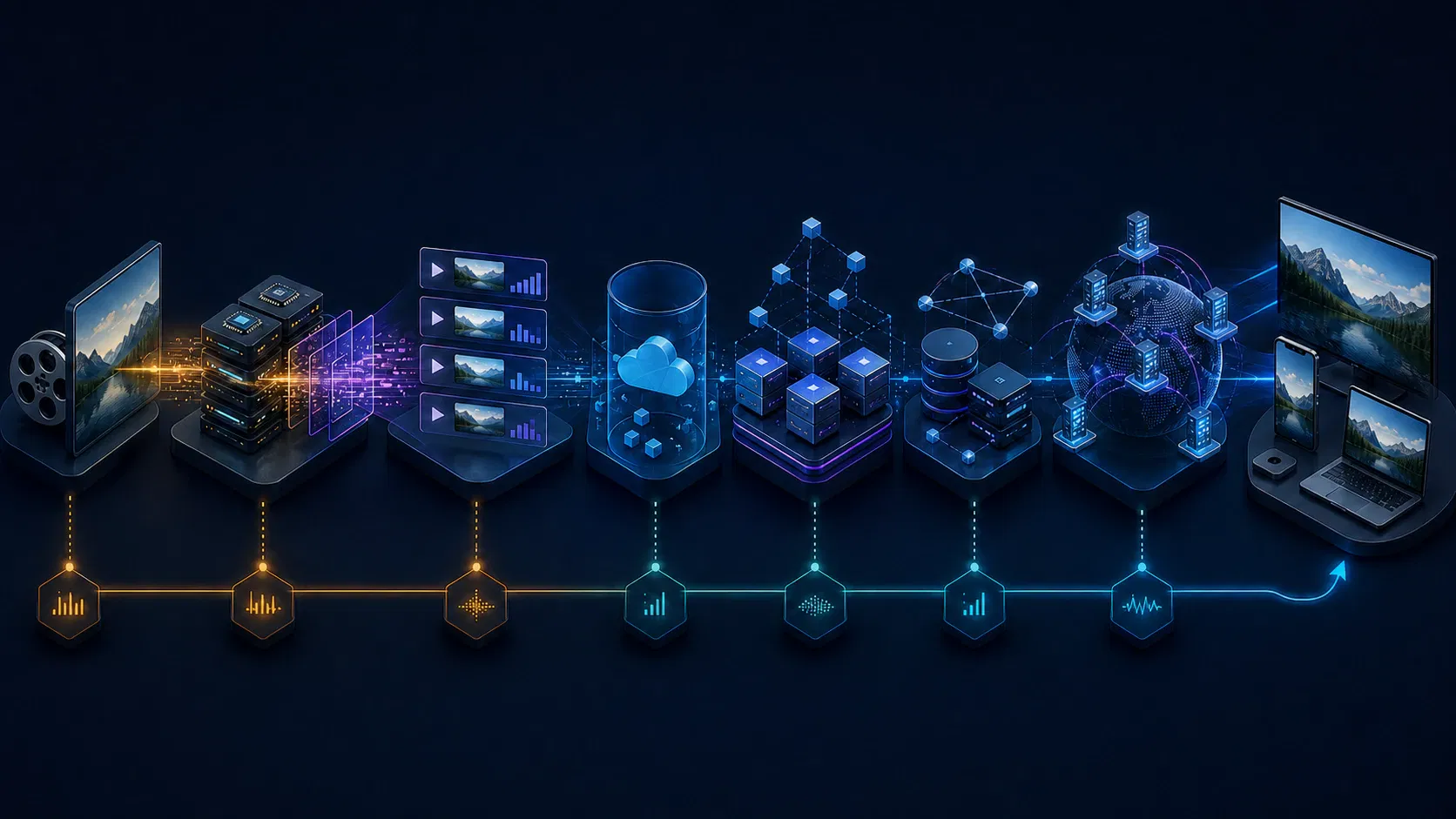
How a Cloud Cost Optimization Service Audits the Full OTT Stack
A credible audit begins with billing exports, contracts, architecture diagrams, Kubernetes and workload telemetry, CDN logs, encoding profiles, storage access patterns, and product analytics. It should reconcile those sources into one baseline rather than infer architecture from the invoice alone.
The assessment should then trace a representative asset and viewing session through the stack.
| Cost layer | Evidence to inspect | Typical optimization questions | Safety metric |
|---|---|---|---|
| CDN and egress | Traffic by CDN, region, ISP, asset, cache status, and origin | Are cache keys fragmented? Can traffic be routed by cost and quality? Are contract tiers used? | Rebuffering, startup time, CDN errors |
| Encoding and packaging | Minutes processed, profiles, codecs, ladder usage, duplicate jobs | Which renditions are rarely selected? Can per-title decisions reduce delivered bits? Are assets re-encoded unnecessarily? | VMAF or agreed quality score, device compatibility |
| Object storage | Age, size, access frequency, versions, replicas, incomplete uploads | Which masters, mezzanines, renditions, and logs need hot access? Which lifecycle rules fit actual retrieval patterns? | Restore time, publishing SLA |
| Compute and Kubernetes | Requests, limits, utilization, autoscaling events, node mix, idle namespaces | Do requests match usage? Are non-production environments scheduled? Are node pools aligned to workload shape? | CPU throttling, OOM events, pod readiness |
| Databases and caches | Capacity, connections, query load, replicas, backup retention | Are read replicas and cache sizes justified? Can old session or analytics data expire? | API latency, error rate, recovery point |
| Observability and analytics | Ingest volume, cardinality, retention, query frequency, duplicate events | Which signals drive an operational or product decision? Can sampling and tiered retention preserve useful evidence? | Detection coverage, incident response time |
| Third-party services | Contract minimums, API calls, licenses, overlap, overages | Are two vendors solving the same job? Does pricing align with viewing growth? | Feature availability, compliance |
CDN, cache efficiency, and data transfer
Delivery usually deserves the first deep dive because both usage and architecture affect it. The service should separate viewer egress from origin fetches, inter-region transfer, cache fill, invalidations, and API traffic. It should also segment performance and cost by geography rather than assuming one CDN is best everywhere.
Cache configuration is an engineering lever, not merely a contract negotiation. Google Cloud’s Media CDN documentation explains that cache keys determine what uniquely identifies an object and that removing request components that do not identify a distinct response can reduce origin contacts. For an OTT audit, that means checking query strings, signed-request design, TTLs, manifest behavior, and purge patterns without weakening access control.
Multi-CDN routing can create leverage, resilience, and geographic efficiency, but only when decisions include real user monitoring and contractual details. A static “send 50% to each provider” rule may preserve an expensive mix or route viewers to a degraded path. Read our deeper guide to reducing streaming CDN costs for the delivery-specific model.
Encoding ladders and content-aware processing
The audit should compare every encoded rendition with actual selection, device coverage, and viewing time. A fixed ladder built for the most complex title can waste bits on simple content; an aggressive ladder reduction can damage quality or device support. The implementation plan should test representative animation, film grain, sports motion, talking-head content, and low-light scenes before changing the catalog.
Use the measured device and network mix to revisit the adaptive bitrate streaming ladder as a system rather than deleting renditions in isolation.
Also look for duplicate transcodes, repeated packaging, abandoned outputs, and retry storms. The goal is not merely to lower price per encoding minute. It is to reduce the full cost per successfully delivered hour across processing, storage, and CDN.
Storage lifecycle by asset class
Masters, mezzanines, distribution renditions, subtitles, artwork, logs, and backups do not share one access pattern. Each needs a documented retention and recovery rule. Amazon S3’s cost guidance describes storage classes for different access patterns and lifecycle rules that transition or expire objects; it also notes that analysis and tagging help teams understand usage.
An optimizer should model transition requests, minimum storage duration, retrieval charges, and restore time before moving data. Archiving thousands of tiny objects can cost more than expected, while archiving a master needed for an urgent re-encode can break a publishing SLA. Storage optimization should therefore be policy by asset class, not a blanket age rule.
Kubernetes, compute, and non-production waste
For Kubernetes, compare requested resources with observed percentiles, not just average node utilization. Oversized requests can strand capacity even when the container looks quiet; undersized limits can create throttling or out-of-memory failures during traffic bursts. The Kubernetes Vertical Pod Autoscaler uses historical utilization, available capacity, and events such as OOM conditions to adjust or recommend resource requests and limits—useful evidence for rightsizing, but still something to validate against workload behavior.
Separate steady APIs from bursty jobs, real-time media services, and non-production environments. Then evaluate scheduling, autoscaling floors and ceilings, node types, spot suitability, and shutdown policies. Commitments should come after this demand model, not before it.
Observability, analytics, and hidden data growth
Map every high-volume event to an owner, retention window, and decision. Playback telemetry needed for quality-of-experience monitoring may justify near-real-time access, while debug logs from a resolved release may not. The optimizer should preserve the signals required for incident response, security, finance, and product analysis while eliminating duplicate payloads, unused dimensions, and indefinite hot retention.
This layer also needs anomaly ownership. FinOps Foundation guidance on anomaly management stresses granular allocation metadata and standard investigation procedures so an alert reaches the team able to resolve it. A dollar threshold with no workload context simply creates another ignored notification.
What the Service Should Deliver
The output should be an implementation system, not a spreadsheet of theoretical savings. Require these deliverables:
- A reconciled baseline. Monthly and daily spend mapped to environment, product, region, service, and owner, with unallocated costs called out.
- An OTT unit-cost model. Definitions, formulas, data sources, and current values for the measures that affect margin.
- A prioritized opportunity register. For each change: evidence, expected range, confidence, engineering effort, dependency, owner, and quality risk.
- A tested implementation backlog. Tickets or infrastructure changes sequenced into reversible batches, with acceptance and rollback criteria.
- A rate and contract plan. Commitment coverage, expiration dates, utilization risk, CDN tiers, and vendor negotiation opportunities after demand is rightsized.
- Governance that fits delivery. Tagging or allocation policy, budgets, anomaly routing, architecture review gates, and a review cadence.
- A realized-savings report. Baseline-adjusted results that distinguish avoided cost, negotiated rate savings, usage reduction, and accounting changes.
For media teams that want the recommendations implemented across infrastructure and playback systems, Apexnova can combine the cost baseline with OTT architecture work across Kubernetes, encoding, storage, and multi-CDN delivery. That makes the engagement useful when the bottleneck is engineering capacity rather than visibility alone.
Separate potential, realized, and avoided savings
Savings language is often inconsistent. “Potential” means an opportunity identified under stated assumptions. “Realized” means spend actually fell after normalizing for changes in traffic, catalog size, regions, and service levels. “Avoided” means a forecasted increase did not occur.
A useful report shows all three without adding them into one inflated number. It also accounts for migration effort, tool fees, early termination charges, new observability costs, and any price increase caused elsewhere in the stack.
A 90-Day Optimization Roadmap That Protects Playback
The exact sequence depends on the estate, but a service should be able to explain how it moves from evidence to safe production change.
Days 1–30: establish truth and stop obvious leakage
- Export at least several representative billing and usage periods, including a peak event or major release when available.
- Allocate spend to workloads and owners; create a temporary “unallocated” queue rather than forcing false precision.
- Define unit metrics and quality guardrails with finance, engineering, product, and video operations.
- Fix verified low-risk waste: orphaned volumes and snapshots, abandoned test resources, accidental duplicate processing, or expired temporary environments.
- Configure cost anomalies with owners and response instructions.
This phase should produce a baseline and a signed-off opportunity backlog. It should not rush architecture changes solely to meet a first-month savings promise.
Days 31–60: optimize high-cost paths in controlled experiments
- Test CDN cache-key, TTL, origin-shield, and routing changes on a subset of traffic.
- Evaluate representative content against revised encoding ladders or content-aware profiles.
- Rightsize stateless services and workers with canary deployments and performance thresholds.
- Apply storage lifecycle policies first to well-understood asset classes.
- Reduce telemetry volume where events have no owner or demonstrated use.
Measure unit cost and quality together. A change that saves bandwidth but raises startup failures does not graduate to wider rollout.
Days 61–90: lock in rates and operating controls
- Purchase commitments only against the stable, rightsized demand floor.
- Renegotiate CDN or platform contracts using measured regional and volume patterns.
- Automate shutdown schedules, policy checks, and anomaly routing.
- Add cost and quality checks to architecture reviews and release scorecards.
- Publish a realized-savings report and schedule the next optimization cycle.
The result should be a lower cost curve and a team that can explain why it moved. If savings disappear as soon as the consultants leave, the engagement delivered a cleanup rather than an operating capability.
How to Choose a Cloud Cost Optimization Service
Choose for workload relevance and implementation discipline, not the largest savings percentage on a sales slide.
| Evaluation question | Strong answer | Warning sign |
|---|---|---|
| How do you model OTT unit economics? | Defines cost per viewing hour or equivalent and reconciles product telemetry with billing | Reports only total monthly savings |
| Which streaming layers do you assess? | CDN, transfer, encoding, storage, compute, data, observability, and contracts | Focuses almost entirely on virtual machines |
| How do you protect playback? | Establishes quality thresholds, canaries, rollback rules, and joint approval | Treats performance as an engineering problem outside scope |
| Who implements recommendations? | Names service and client owners, creates tickets or code changes, and verifies results | Hands over a findings deck |
| How are savings calculated? | Separates potential, realized, and avoided savings; normalizes for demand | Adds incompatible savings categories together |
| How do you handle provider incentives? | Discloses reseller revenue, referral fees, and commitment incentives | Claims independence without commercial disclosure |
| What access do you require? | Starts read-only, follows least privilege, and documents data handling | Requests broad administrator access for discovery |
Questions to ask before signing
Ask the provider to walk through a sample recommendation from evidence to production verification. Request the exact baseline formula, the people required from your team, the expected implementation format, and who owns rollback decisions. Confirm whether fees are fixed, recurring, or linked to savings and how disputed savings are handled.
Then test their media depth. Can they explain how cache fragmentation increases origin traffic? Do they understand why a live-event capacity plan differs from VOD? Will they evaluate encoding, packaging, DRM, telemetry, and CDN contracts together? A provider does not need to operate every component, but it must recognize cross-stack effects.
Finally, check whether the engagement builds internal capability. The FinOps principles put shared ownership, accessible data, business value, and continuous improvement at the center. Your contract should reinforce those behaviors instead of making the vendor the only party that understands the model.
Frequently Asked Questions
What does a cloud cost optimization service include?
It usually includes billing and architecture discovery, cost allocation, waste and rightsizing analysis, rate and commitment review, an implementation roadmap, governance controls, and realized-savings reporting. For OTT, it should also examine CDN and egress, encoding, packaging, video storage, Kubernetes, playback telemetry, and streaming vendor contracts.
How long does cloud cost optimization take?
An initial assessment can often establish a baseline and low-risk backlog within a few weeks, but durable optimization is continuous. Architecture experiments, contract cycles, seasonal viewing patterns, and commitment decisions may require several months of evidence. Ask for milestones and exit criteria rather than a universal deadline.
What is the difference between cloud cost optimization and FinOps?
Cloud cost optimization is the technical and commercial work that improves usage and rates. FinOps is the cross-functional operating practice that connects technology cost to business value and repeats the Inform, Optimize, and Operate cycle. A strong service should contribute to both.
How should an OTT platform measure cloud efficiency?
Start with cost per viewing hour, then add metrics that match the model: cost per active subscriber, ad-supported session, completed stream, or peak live viewer. Track these beside startup time, rebuffering, playback failures, and revenue so a cheaper system is not mistaken for a better one.
Can cloud costs be reduced without hurting streaming quality?
Yes, when changes remove waste or deliver the same outcome more efficiently and are tested against explicit quality thresholds. Cache improvements, content-aware encoding, storage lifecycle rules, rightsizing, and telemetry controls can reduce cost, but each requires workload-specific validation and a rollback path.
Should commitments be purchased before or after rightsizing?
Usually after rightsizing and separating stable baseline demand from bursty demand. Buying against an oversized baseline can lock in waste. Model coverage, utilization, growth, expiration, and portability before committing, and keep live-event or uncertain workloads flexible where that has business value.
When should a company hire an external cloud cost optimization service?
Consider one when spend grows faster than the team can explain, costs remain unallocated, provider recommendations are not implemented, the stack spans multiple specialist services, or no one owns ongoing optimization. An external service is also useful before a major commitment, migration, launch, or CDN renegotiation when independent workload evidence can improve the decision.
Conclusion: Buy an Operating Capability, Not a Savings Claim
A cloud cost optimization service is worth buying when it can trace spend through the OTT stack, connect it to viewing economics, implement changes safely, and prove realized results. The decision should rest on the provider’s media depth, measurement discipline, access model, and ability to protect playback—not a promised percentage detached from your baseline.
Before selecting a partner, ask for a full-stack scope and one worked example of evidence, change, quality guardrail, and verified outcome. If your main constraint is turning recommendations into production improvements, start with an OTT cloud cost assessment that includes engineering ownership and a 90-day implementation backlog.