


Subscription Fatigue: How OTT Platforms Reduce Churn
A viewer finishes one series, scans four streaming apps, and notices another price increase before finding anything worth watching. That moment is subscription fatigue: the combined strain of recurring costs, fragmented content, too many choices, and too little obvious value.
For an OTT operator, the tempting response is a discount. But price is only one cause. Sustainable churn reduction starts by identifying which part of the viewer’s experience has stopped earning its place in the monthly budget.
What is subscription fatigue?
Subscription fatigue is the frustration or overload people feel when they manage too many recurring services for less value than they expect. In streaming, it can lead viewers to downgrade, rotate between platforms, switch to free options, or cancel completely.
The problem is bigger than the number of subscriptions. A household may happily keep several services when each one is useful and easy to navigate. Fatigue appears when the effort and cost of maintaining the portfolio outweigh the entertainment it reliably delivers.
That imbalance usually comes from four pressures:
- Budget pressure: the combined bill rises, or a single price increase makes the service easier to question.
- Content fragmentation: a viewer needs several apps to follow the shows, films, or sports they care about.
- Decision friction: large catalogs and weak discovery turn leisure time into search time.
- Low continuity of value: a subscriber joins for one event or season, finishes it, and sees no compelling reason to stay.
The latest evidence shows those pressures operating together. In a 2026 survey of 1,000 U.S. adults, Reviews.org found that viewers paid for about three streaming services on average; 52% said a price increase had caused them to cancel or downgrade, while 48% had subscribed for one show or event and then canceled. Those figures describe two different jobs: protect affordability, and build value between tentpole releases. Reviews.org details the survey and methodology.
Why subscription fatigue becomes streaming churn
Subscription fatigue increases churn when a renewal forces the viewer to compare the next payment with the value they expect to receive. If the app has been unused, discovery has failed, or the desired season has ended, cancellation becomes a rational portfolio decision—not necessarily a rejection of the brand.
This distinction matters because “churn” combines several behaviors that need different interventions.
| Churn pattern | What the viewer may be saying | Better response |
|---|---|---|
| Price-driven downgrade | “I still want this, but not at this price.” | Lower-cost tier, annual option, or right-sized plan |
| Content-cycle cancellation | “I watched what I came for.” | Upcoming-release roadmap, pause, or timely win-back |
| Discovery failure | “There is probably something here, but I cannot find it.” | Better metadata, search, onboarding, and recommendations |
| Product-quality churn | “Watching is too unreliable or difficult.” | Fix playback, device, login, entitlement, or billing failures |
| Portfolio fatigue | “I cannot justify another separate service.” | Bundle, aggregation, or a differentiated must-keep use case |
Market-level churn is not the same as service failure. Antenna estimates that Premium SVOD subscriptions grew 7% in 2025 while weighted average monthly churn stabilized at 4.6%. It also found that 31% of annual gross additions and 57% of net additions arrived in the fourth quarter, concentrated around promotions and major programming. That pattern suggests a mature, event-driven market in which acquisition and return behavior deserve as much attention as a single cancellation rate. Antenna’s 2025 year-in-review explains the pattern.
The right question is therefore not simply, “How do we stop cancellations?” It is, “Which customers should we retain now, which should we let pause, and which can we earn back for the next relevant moment?”
Diagnose fatigue before choosing a retention tactic
A save offer shown at cancellation is late evidence. Build the diagnosis from behavior that appears earlier.
Separate value signals from technical failures
Track the viewer journey from entitlement to playback, not just sessions and watch time. A subscriber who cannot sign in on a television, repeatedly encounters DRM errors, or abandons after buffering has a product problem. A subscriber who streams flawlessly but never finds a second title has a value problem.
Useful leading signals include:
- days from signup to first successful play;
- searches that return no result;
- browsing time before playback;
- recommendation impressions that lead to a play;
- unfinished starts and early exits;
- playback-failure and rebuffering rates by device;
- active days and distinct titles watched;
- payment failures versus voluntary cancellations;
- days remaining until the next relevant release.
Gracenote’s 2025 State of Play survey gives discovery friction real scale. Across 3,000 streaming users in six countries, 45% described streaming as overwhelming, viewers spent 14 minutes on average looking for something to watch, and 49% said difficulty finding content could make them cancel a service. Gracenote published the findings and sample details.
Ask for a reason without treating it as the whole truth
Use a short cancellation survey with mutually exclusive primary reasons: price, finished desired content, insufficient catalog, poor recommendations, technical problems, billing issue, or another service. Pair the answer with actual usage and quality-of-experience data.
Self-reported “too expensive” can mean the price is objectively unaffordable, but it can also mean the viewer did not discover enough value. Likewise, “not enough content” may reflect a rights gap, a release-cadence gap, or an interface that buried relevant titles. The response should follow the combined evidence.
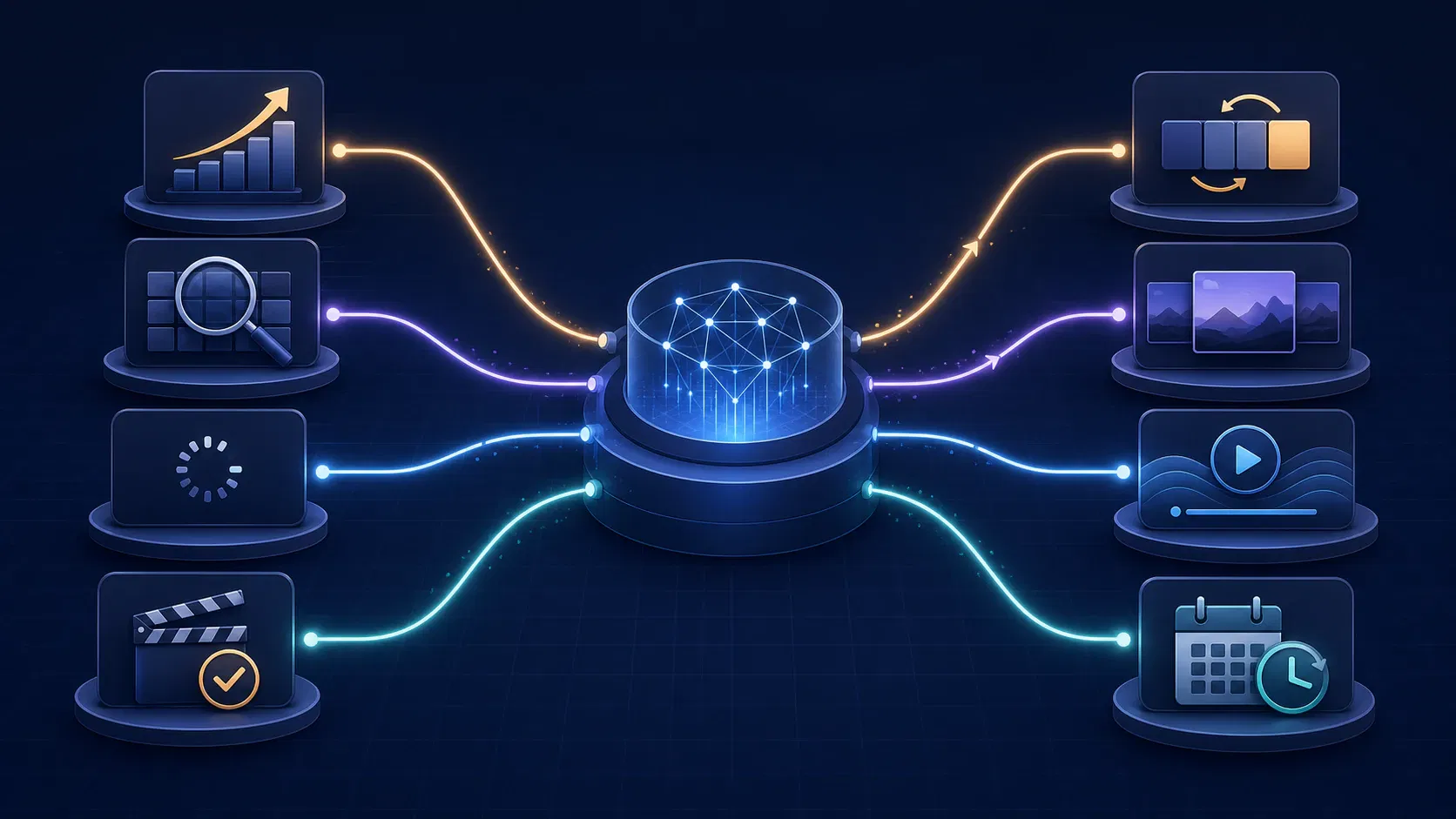
Seven ways OTT platforms reduce subscription fatigue
The goal is not to trap every subscriber. It is to lower unnecessary friction, make value easier to see, and give viewers an honest option that fits their current intent.
1. Build a pricing ladder, not a permanent discount habit
Offer distinct value exchanges: a lower-priced ad-supported plan, a standard plan, a premium plan, or an annual commitment with a meaningful saving. Each tier should have a clear audience and measurable economics.
Deloitte’s 2024 U.S. research found that subscribing households paid an average of $61 per month for four SVOD services. It also found that 48% of consumers would cancel their favorite paid service after a $5 monthly increase, while more than half would consider a discounted annual commitment. Deloitte’s SVOD analysis connects those findings to retention.
Do not assume that one cheaper tier solves every problem. Deloitte’s current Digital Media Monitor says 68% of paid SVOD households had at least one ad-supported service as of March 2026, up from 54% a year earlier. That makes ad-supported access mainstream, but a viewer will still leave if the catalog, ad load, or experience does not justify the total cost. The monitor tracks the continuing shift toward ad-supported streaming.
For a deeper view of the value exchange, see why Netflix has ads.
2. Make pause and downgrade first-class account states
A pause option acknowledges content cycling without turning a temporary break into a permanent separation. Preserve profiles, watchlists, preferences, and renewal reminders, then let the viewer return without rebuilding the account.
Downgrades should be equally clear. Show the current plan, the new price, the features that change, and the effective date before confirmation. Measure whether these options improve six- and twelve-month customer value—not merely whether they suppress cancellations this week.
3. Shorten the path from opening the app to pressing play
Recommendations should solve a viewer’s next decision, not showcase the size of the catalog. Use explicit onboarding signals, recent behavior, household profiles, language, availability windows, and session context to rank a smaller set of relevant choices.
Search must understand titles, people, genres, teams, competitions, and common intent phrases. Continue-watching rows need accurate progress. Notifications should point to something the viewer can watch now, on the device and plan they actually use.
Track median time to first play and the share of sessions abandoned before playback. Those metrics expose fatigue more directly than raw impressions.
4. Design a content cadence for continuity
A major release can acquire subscribers, but the weeks after it determine whether they stay. Map the audience overlap between tentpoles, returning series, live events, library titles, and adjacent genres. Then use in-product merchandising and lifecycle messaging to bridge one relevant moment to the next.
Do not stretch releases only to make cancellation inconvenient. The stronger strategy is to demonstrate a credible pipeline: what is new now, what arrives next, and why it matches the subscriber’s interests.
5. Treat playback reliability as a retention feature
Pricing and content cannot compensate for repeated startup failures, buffering, subtitle problems, remote-control traps, or device-specific crashes. Define experience thresholds by device cohort and network condition, then connect those signals to customer records and cancellation reasons.
The same applies to commerce. Failed renewals need recovery flows that distinguish an expired card from a viewer choosing to leave. Entitlements should update consistently across web, mobile, and connected TV after any plan change.
Apexnova builds OTT platforms across those layers—apps, playback, monetization, analytics, and cloud delivery—so a retention decision can become consistent product behavior instead of a disconnected campaign. That approach is most useful when churn signals cross vendor and device boundaries and the operator needs one accountable engineering model.
6. Use bundles to remove fragmentation, not conceal it
A good bundle lowers total cost or reduces management effort while preserving clear access and billing. A weak bundle simply groups services the viewer did not want.
In the Reviews.org survey, 68% of respondents said they would consolidate streaming services into one monthly bill if they could. Treat that as evidence of demand for simplicity, not proof that every aggregation deal will retain users. Define who owns discovery, customer support, identity, entitlement updates, and cancellation before launching the offer.
7. Make cancellation and return trustworthy
Show renewal terms plainly, provide an accessible cancellation path, and confirm what happens to access and saved data. Dark patterns may delay a cancellation while damaging the chance of a future return.
The U.S. Federal Trade Commission reopened questions around negative-option regulation in 2026 and continues to identify unclear consent and difficult cancellation as sources of consumer harm. Whatever the final regulatory path in a market, transparent enrollment and exit are durable trust requirements. The FTC’s current Negative Option Rule page documents the ongoing process.
Measure retained value, not just a lower churn rate
A retention program can make headline churn look better while weakening the business. Heavy discounts may keep low-engagement accounts active; aggressive saves may reduce trust; annual contracts may delay rather than solve a value problem.
Use a balanced scorecard:
- voluntary churn by tenure, plan, device, and cancellation reason;
- downgrade and pause rates;
- return rate and time to return;
- net revenue retention after discounts and refunds;
- successful-play rate and time to first play;
- active days and titles watched per subscriber;
- discovery-to-play conversion;
- customer support contacts per 1,000 subscribers;
- lifetime value by acquisition source and content cohort.
Review cohorts over at least one complete content and billing cycle. If pause users return for the next season, an apparent cancellation problem may actually be healthy flexibility. If discounted users remain inactive, the offer has postponed churn without rebuilding value.
The instrumentation behind that scorecard is covered in this video analytics software guide.
A practical 90-day response plan
Start with evidence, then make the smallest changes that can distinguish one cause from another.
Days 1–30: establish the baseline. Unify subscription, billing, playback, device, discovery, and support events. Segment voluntary churn from payment failure, and audit the cancellation journey on every supported platform.
Days 31–60: remove obvious friction. Fix the highest-volume playback and entitlement failures. Improve zero-result search, continue watching, plan comparison, downgrade, and pause. Launch a cancellation-reason survey tied to behavioral data.
Days 61–90: run controlled retention tests. Test one pricing or packaging change per segment, one discovery improvement, and one content-bridge campaign. Compare incremental retained revenue, engagement, support burden, and return behavior against a holdout group.
At the end of the quarter, invest in the interventions that restored durable usage or made a later return more likely. Retire tactics that only delayed the same cancellation at a higher cost.
Frequently asked questions
What causes subscription fatigue?
Subscription fatigue is usually caused by accumulated recurring costs, fragmented content, too many choices, weak discovery, frequent price changes, and subscriptions that are used only around a particular show or event. Technical and billing friction can intensify the feeling that a service is no longer worth managing.
Is subscription fatigue the same as churn?
No. Subscription fatigue is a viewer’s sense of overload or declining value; churn is the measurable act of canceling. Fatigue can also lead to downgrades, pauses, lower engagement, use of free ad-supported services, or rotation between paid platforms.
How can streaming services reduce subscription fatigue?
Streaming services can reduce subscription fatigue by offering clear plan choices, pause and downgrade options, better content discovery, reliable playback, transparent billing and cancellation, relevant release cadences, and bundles that genuinely simplify access.
Do ad-supported plans prevent subscription churn?
They can retain viewers whose main problem is price, but they do not solve poor discovery, weak content fit, or technical failures. Operators should measure total revenue, engagement, ad tolerance, and later churn rather than treating a downgrade to ads as an automatic success.
Should an OTT platform try to stop every cancellation?
No. Some viewers rationally rotate after a season or event. A transparent pause or cancellation followed by a relevant win-back can produce more trust and long-term value than a costly discount or obstructive exit flow.
Conclusion
Subscription fatigue is not one churn problem. It is a warning that price, content, discovery, experience, or account flexibility has stopped matching a viewer’s current needs.
OTT teams should first classify the cause, then choose the smallest credible response: repair playback, improve discovery, offer a better-fit plan, bridge the next content moment, or let the viewer leave cleanly and earn the return. Begin with a 90-day baseline and test cycle, then use the video monetization platform framework to decide which pricing and packaging changes deserve a place in the product roadmap.