
A 4.97★ rating is rare. On an app that asks people to pay for every episode, it is rarer still.
It does not come from one feature. It comes from three things working every single time: the next episode starts the moment you swipe, paying for it takes seconds, and the app stays out of the way.
Apexnova built Binj TV end to end, the Android, iOS and web apps and the backend behind them. This is how each of those three things was built.
The best feature was the one we removed
Microdramas are not short films on a normal streaming app. A series runs to dozens of episodes, each a minute or two long and shot vertically. Viewers decide within seconds whether to keep going, and a good series is watched in a single sitting.
That changes what the app needs to be. A conventional OTT app is built around browsing: categories, detail pages, a horizontal player with a settings menu. Binj TV began with that shape. The decision that defined the product was taking most of it out.
Every screen that did not help someone start the next episode was removed.
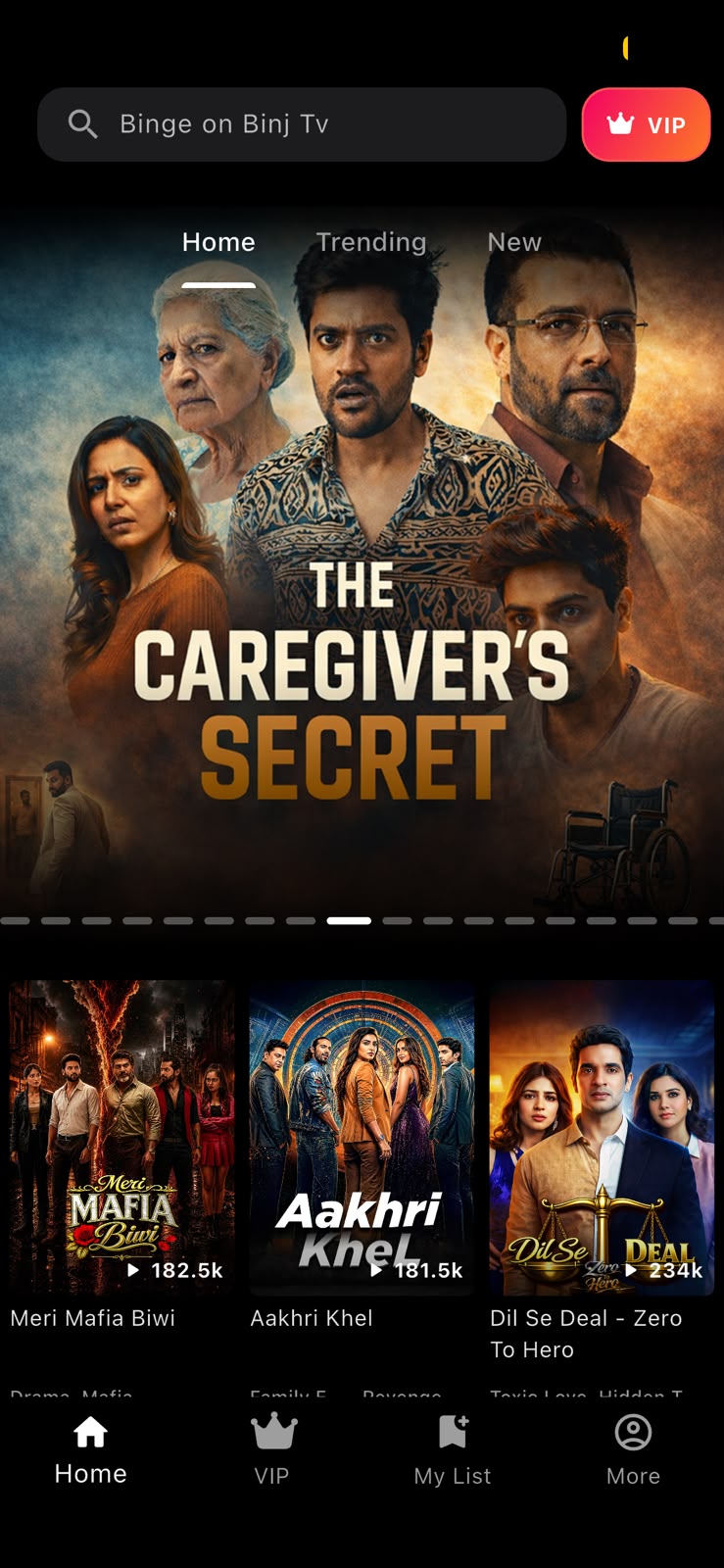
What remained is deliberately small: a home feed of shelves and top categories, a full-screen vertical player, an episode grid for jumping around a series, search, a watchlist, likes and sharing, and a wallet with a plans page.
The result is an app with almost nothing to learn, and it shows in how people review it.
The swipe is the product
If the next episode takes two seconds to appear, the spell breaks, and the viewer is one thumb movement away from another app.
The obvious fix is to preload everything. On a phone that fails fast: video players are expensive, and a sixty-episode series would exhaust memory long before the finale.
Binj TV keeps exactly three players alive at any moment. Not more, not fewer.
The window slides with the viewer. The previous episode is loaded and paused in case they swipe back. The current one is playing. The next one is buffered and ready. Every other episode is released. Each swipe disposes the player that fell out of range and prepares a new one at the leading edge.
Memory stays flat. Whether someone is on episode 3 or episode 53, the app uses the same amount, and the next episode is always already there.
Hands-free binges. When an episode ends, the app advances by itself, so a whole series can be watched without touching the screen.
One trailer for the whole feed. On the home screen, series tiles play silent trailers. Instead of a video per tile, the app allows a single trailer player for the entire screen. It attaches to a visible tile and is torn down the moment that tile scrolls away. The feed feels alive, and the scroll never stutters.
The lesson carries over to any short-video product: preloading is a memory budget, not a network trick. Decide how many players you can afford, then spend them on the episodes the viewer is most likely to reach next.
A paywall that doesn't break the binge
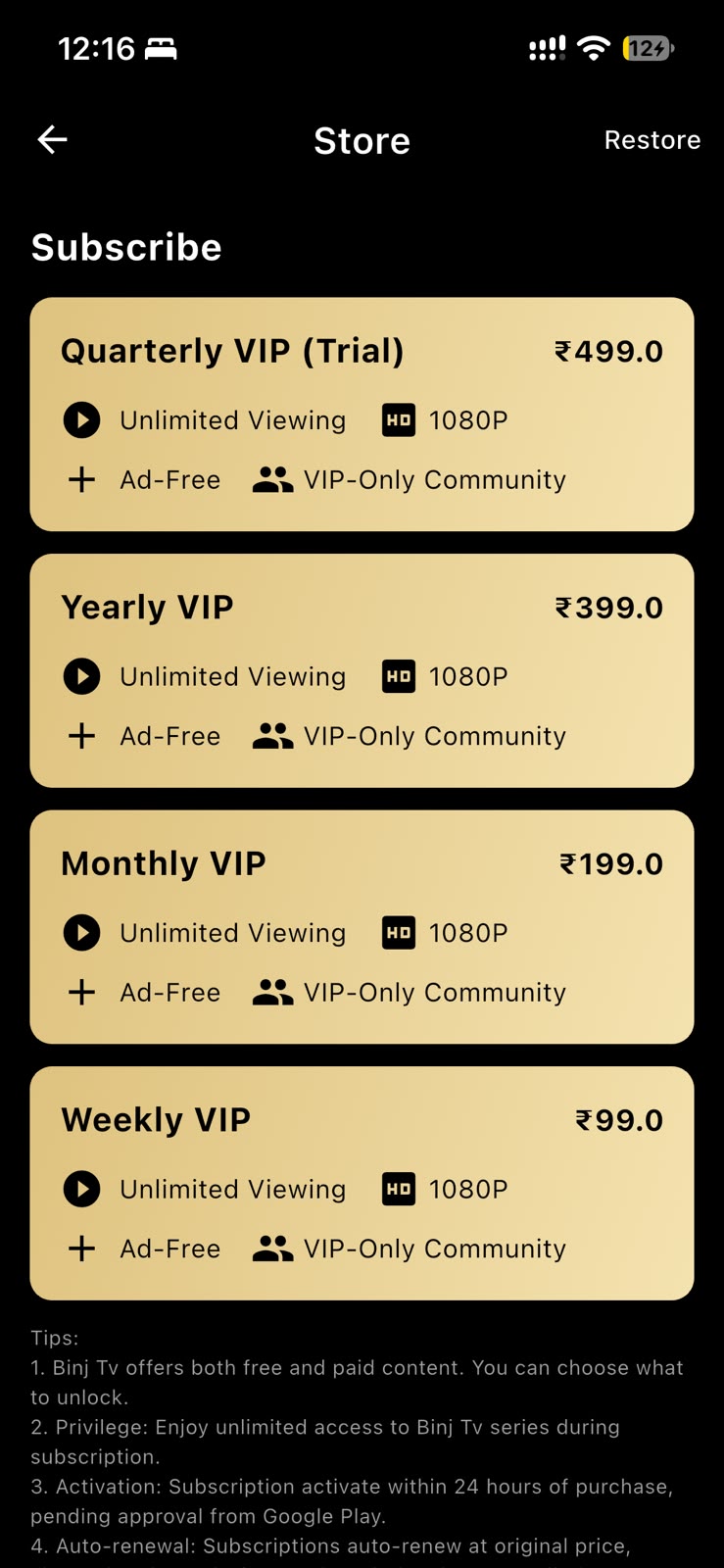
Binj TV uses the model the microdrama format has made its own. Every series opens with free episodes. After that, each episode is unlocked with coins, and heavy viewers can take a subscription that removes the limit altogether. Coin packs come with bonus coins, and a history screen shows every purchase and every coin spent.
The engineering question is where the paywall sits. Sending a viewer to a separate screen at the exact moment they are most hooked is the fastest way to lose them.
The paywall appears over the player. The episode stays on screen behind it, and playback continues from exactly where it stopped.
The wallet lives on the server. Coin balances and unlocks are held by the backend Apexnova built, so a balance is the same on a phone, a second device and the web.
Nothing is granted until the backend confirms. The app waits for the server to verify a payment before unlocking anything, which is what makes a wallet safe to build a business on.
It never sells what you don't need. Someone on an unlimited plan is never shown a coin top-up.
If you are weighing these models for your own product, our guide to microdrama monetisation compares them in detail.
Pricing tests in an afternoon, not a release cycle
Pricing a content app is never finished. The right number of free episodes, the pack that sells best and the wording that converts all change as the catalogue grows.
If each change needed a new app release, an experiment would take days and reach only the people who updated. So the paywall in Binj TV is described by the server.
Everything that sells is configuration. The plans on offer, the default selection, the layout of the plans page, the copy, the promotional video and even the sign-in flow are read from configuration the backend sends at launch.
A pricing test can start in the afternoon and be measured by the evening, on every installed copy at once.
Fix the signal before the bugs
Stability is the third leg of a high rating, and the most useful work here started with an uncomfortable finding: the crash dashboard could not be trusted.
The app had been reporting every framework error as a fatal crash. On a weak mobile connection a poster fails to load, the app shrugs and shows a placeholder, and the viewer notices nothing. The dashboard recorded a crash anyway. Real defects were buried under network noise.
First, the signal. Errors are now classified before they are reported. Transient network and cache failures are still recorded, so nothing is hidden, but they no longer count as crashes.
Then, the real defects. With the noise gone, they were visible, and they were fixed: dragging the progress bar in the instant before a new episode was ready; network responses arriving after the viewer had left a screen; a device-level storage failure on some Android phones that blocked sign-in entirely; and a tap on a plan that was not available in the viewer's region.
None of these is dramatic. Together, they are the difference a review score measures.
Every ad lands on the right series
Microdrama apps grow through paid social. A viewer sees a clip from a series in an ad, installs the app, and expects to land on that series, not on a generic home screen.
The intent survives the install. Binj TV uses Deeplinkly, Apexnova's own deep-linking product, to carry the link in the ad through the store, so the right series opens on first launch.
Ad platforms learn who pays. The app reports its funnel (viewing a series, opening the plans page, starting a payment, signing up) using the standard event names Meta and Google Analytics already understand. Campaigns can then optimise for paying viewers, not just installs.
We cover both topics in more depth in deferred deep linking for OTT apps and OTT campaign attribution.
One codebase, three platforms
Binj TV is written in Flutter, and the Android app, the iOS app and the website are built from the same code. Sign-in, the wallet, the catalogue and the paywall logic are written once.
The platforms differ only where they have to. The web version has its own player and its own home layout, with a header and footer, because a browser on a laptop is not a phone held upright. Everything underneath is shared, so a small team can maintain all three, and a fix lands everywhere at once.
Because Apexnova also built the backend, the apps and the API were designed together. The server-described paywall and the cross-device wallet are simple when one team owns both sides.
 Scroll TV